

Proove or Prove: Which Spelling Is Correct?
Have you ever stopped while writing and wondered whether the correct spelling is proove or prove? This is a common spelling confusion because the word proof contains two O’s.
However, the correct spelling is prove, with only one O. Let’s explore its meaning, grammatical forms, examples, and common mistakes to help you use it confidently.
Quick Answer: Proove vs. Prove
Prove is the correct spelling in standard modern English. It is a verb that means to demonstrate that something is true or establish a fact through evidence.
Proove is generally considered a spelling mistake in contemporary English.
| Word | Correctness | Explanation |
| Prove | Correct | Standard English verb |
| Proove | Incorrect | Common misspelling |
| Proof | Correct | Noun referring to evidence |
Examples:
- Correct: She wants to prove her point.
- Incorrect: She wants to proove her point.
- Correct: We need proof before accepting the claim.
Remember that prove has one O, while proof has two.
What Does Prove Mean?
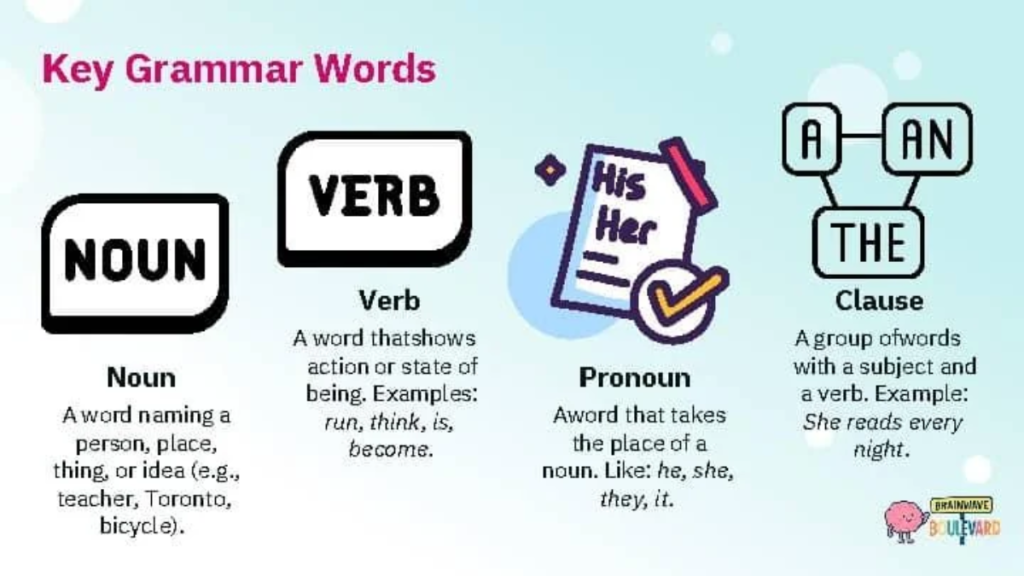
The word prove means to demonstrate that something is true, correct, or genuine. It is commonly used when presenting evidence, explaining facts, or showing that a statement is accurate.
For example, a student might prove an answer by showing the steps used to solve a mathematical problem. Similarly, a researcher may use scientific findings to prove a particular claim.
The word can also describe demonstrating personal abilities. Someone starting a new job might work hard to prove that they can handle their responsibilities.
Different Meanings of Prove
The meaning of prove can vary depending on the context.
1. To establish that something is true
Example: The documents helped prove that the agreement was genuine.
2. To demonstrate someone’s ability
Example: He worked hard to prove himself as a capable manager.
3. To show that something produces a particular result
Example: The new teaching method proved successful.
4. To establish a mathematical result
Example: The students were asked to prove the theorem using geometric principles.
Why Is Proove Incorrect?
The confusion surrounding proove mainly comes from the spelling of related English words. People often assume that because proof contains two O’s, its related verb should have the same spelling.
However, English does not always follow identical spelling patterns for related words. The correct verb is prove, not proove.
Consider these examples:
- You must prove your identity before entering.
- The results prove that the method works.
- She wants to prove her abilities through hard work.
Although proove appeared historically as an obsolete spelling, it is not accepted in standard contemporary English.
The Confusion Between Prove and Proof
One major reason people write proove is their familiarity with the noun proof. Both words are related, but they have different grammatical functions.
Prove is a verb that describes an action, while proof is a noun that refers to evidence or information supporting a statement.
Examples:
- I can prove that the information is correct.
- I have enough proof to support my argument.
- Scientists must prove their findings through research.
- Scientific proof requires reliable evidence.
Remembering this difference will help you avoid unnecessary spelling mistakes.
How to Use Prove in a Sentence
The word prove appears in everyday conversations, academic assignments, business documents, and professional communication.
It is often used with words such as that, whether, and how to connect an action with an explanation or result.
Examples:
- I can prove that the information is accurate.
- The experiment will prove whether the theory is correct.
- Her achievements prove how dedicated she is.
- This experience may prove useful in the future.
Prove as Showing Evidence
When used in the context of evidence, prove describes supporting a statement with reliable information or facts.
For example, a company might compare productivity results to prove that its new software improves efficiency.
Other examples include:
- The research findings prove that the software improves efficiency.
- These records help prove the accuracy of the report.
- The available evidence does not prove that the claim is true.
- Can you prove that the information came from a reliable source?
Prove as Demonstrating Ability
People also use prove when discussing personal achievements, professional development, and individual performance.
For example, a new employee may want to prove that they can complete assignments independently.
Examples:
- She wants to prove herself as a talented writer.
- He worked hard to prove his leadership skills.
- The young athlete hopes to prove his abilities.
- You do not need to prove your worth to everyone.
Prove, Proves, Proved, Proven, and Proving
Like other English verbs, prove changes its form according to the subject and tense.
Learning these forms can help you avoid spelling mistakes and construct grammatically correct sentences.
| Form | Grammatical Use | Example |
| Prove | Base form | I want to prove my point. |
| Proves | Present simple, third-person singular | This evidence proves the claim. |
| Proved | Simple past | She proved her ability. |
| Proven | Past participle | The method has proven effective. |
| Proving | Present participle | He is proving his skills. |
Understanding the Verb Forms
1. Prove
The base form is used with subjects such as I, you, we, and they. It also follows modal verbs such as can, will, and should.
Examples:
- I want to prove my point.
- They will prove their results.
- You should prove your statement.
- We can prove that the calculation is correct.
2. Proves
The form proves is used with third-person singular subjects in the present simple tense, including he, she, and it.
Examples:
- She proves her knowledge through practical work.
- This document proves his identity.
- The experiment proves the theory.
- His performance proves that he is experienced.
3. Proved
Proved is the simple past form. It describes an action that happened in the past.
Examples:
- The investigation proved the claim was false.
- She proved her skills during the interview.
- His hard work proved successful.
- The results proved our prediction correct.
4. Proven
Proven is commonly used as a past participle with helping verbs such as has, have, and had. It can also function as an adjective.
Examples:
- The strategy has proven effective.
- They have proven their commitment.
- This is a proven method of improving productivity.
- The research has proven the importance of regular practice.
5. Proving
The form proving is used in continuous tenses and as a gerund.
Examples:
- She is proving her abilities through consistent effort.
- The research team is proving its hypothesis.
- Proving the statement requires additional evidence.
- He is proving that patience produces good results.
Prove vs. Proof: Understanding the Difference
Although prove and proof are related, they cannot always replace each other.
Prove is a verb, meaning it describes the action of demonstrating something. Proof is a noun, referring to the evidence that supports a statement.
Consider these examples:
- I need to prove that my answer is correct.
- I need proof that my answer is correct.
Both sentences are correct, but their grammatical structures are different.
| Prove | Proof |
| She wants to prove her innocence. | She has proof of her innocence. |
| The results prove the theory. | The results provide proof of the theory. |
| Can you prove your statement? | Can you provide proof of your statement? |
| His achievements prove his dedication. | His achievements are proof of his dedication. |
A simple trick is to remember that proof can follow words such as the and some, while prove describes an action.
Proove or Prove in British and American English
English has several regional spelling differences. For example, British English uses colour, while American English generally uses color.
However, prove is the correct spelling in both British and American English. Neither variety uses proove as the standard modern spelling.
There is a small difference in the use of its past participle. Both proved and proven are correct, although preferences can vary.
Examples:
- The results have proved useful.
- The results have proven useful.
Both sentences are grammatically acceptable.
Common Spelling Mistakes to Avoid
English learners sometimes make spelling mistakes because they rely on similar-looking words. The difference between prove and proof is a good example.
Here are some common mistakes and their corrections:
| Incorrect | Correct |
| Proove | Prove |
| Prooves | Proves |
| Prooved | Proved |
| Prooving | Proving |
| Proove it | Prove it |
| Prooving a point | Proving a point |
Another common mistake involves using the wrong grammatical form.
For example, She prove her point is incorrect because the subject she requires proves in the present simple tense.
Similarly, He has prove his ability is incorrect. You should write He has proved his ability or He has proven his ability.
Easy Tricks to Remember the Correct Spelling
If you frequently confuse proove with prove, these simple techniques can help.
1. Remember prove and proof.
The verb prove has one O, while the noun proof has two. This is the easiest way to remember their different spellings.
2. Connect prove with familiar words.
Think about words such as move and love. This can help you remember that prove also uses one O.
3. Practise writing sentences.
Use the word in everyday examples:
- I can prove my point.
- She wants to prove herself.
- The results prove the theory.
- We need proof before making a decision.
4. Use spell-checking tools.
Most modern writing applications can identify proove as a spelling mistake. However, understanding the correct spelling yourself is still important.
5. Read your writing carefully.
Reviewing your sentences can help you identify spelling and grammar errors before submitting or publishing your work.
Synonyms and Related Words for Prove
Learning synonyms can improve your vocabulary and help you avoid repeating the same word.
Depending on the context, you can use several alternatives to prove.
- Demonstrate: To show how something works or establish a point.
- Establish: To confirm something through reliable information.
- Verify: To check whether information is accurate.
- Confirm: To support or establish that something is true.
- Substantiate: To support a statement with evidence.
- Validate: To establish that something is valid or acceptable.
- Show: To make something clear through information or actions.
For example, instead of writing, “The report proves that the figures are accurate,” you could write, “The report verifies the accuracy of the figures.”
Choose a synonym according to the meaning you want to communicate. Words such as demonstrate and substantiate are particularly useful in academic writing.
Using Prove in Academic and Professional Writing
Correct spelling is important in academic and professional communication. Even a small mistake can distract readers and make your work appear less polished.
In academic writing, prove is commonly used when discussing research findings, mathematical arguments, and scientific explanations.
Examples:
- The experiment helps prove the accuracy of the proposed method.
- Researchers must prove their conclusions through reliable evidence.
- The mathematical solution proves that both expressions are equivalent.
In professional communication, the word can describe demonstrating competence or supporting a business claim.
Examples:
- The employee proved her ability to manage complex projects.
- The financial documents prove the accuracy of the reported figures.
- The company aims to prove the effectiveness of its new strategy.
When publishing online articles, review your work for spelling, grammar, and sentence structure. Clear writing helps readers understand your message and improves the overall quality of your content.
Frequently Asked Questions
Is it proove or prove?
Prove is the correct spelling in standard modern English. Proove is generally considered a misspelling, so always use prove in contemporary writing.
Why do people spell prove as proove?
People often confuse the spellings because the related noun proof contains two O’s. However, the correct verb is prove, with only one O.
What is the past tense of prove?
The simple past tense is proved. For example: “She proved that her answer was correct.” Its past participle can be proved or proven.
Is proven a correct English word?
Yes, proven is a correct English word. It is commonly used as the past participle of prove and can also function as an adjective.
Example: The company uses a proven method to improve quality.
What is the difference between prove and proof?
Prove is a verb that describes demonstrating something is true. Proof is a noun that refers to the supporting evidence.
Example: “I can prove my claim because I have enough proof.”
Conclusion
When choosing between proove or prove, the correct spelling is prove. Although the extra O might seem natural because of the spelling of proof, the two words have different grammatical functions.
Remember that prove is a verb used to demonstrate the truth of something, support a claim, or show someone’s abilities. Its main forms include prove, proves, proved, proven, and proving.
Whether you are writing an academic assignment, preparing a business email, or creating website content, using the correct spelling makes your communication clearer and more professional.


2 Comments